

World Mental Health Day | Mental Health in Midlife | FitLikeMummy
There’s something I’ve been thinking about lately.
Who looks after the woman who looks after everyone else?
You know the one. The woman who gets up every morning, gets dressed, goes to work, takes care of her family, remembers everyone’s birthdays, sorts out everyone’s problems and somehow still finds the energy to ask other people how they’re doing. The woman who has a million things going on in her own life but will still show up when someone needs her. The woman everyone describes as strong.
I know that woman because I’ve been that woman.
And if there’s one thing I’ve learnt, it’s that being strong all the time is bloody exhausting.
So, this World Mental Health Day, I don’t want to give you another motivational speech about resilience, positive thinking or becoming the best version of yourself.
Sometimes we don’t need another reminder to be stronger. Sometimes we just need permission to be human.
The Problem With Being the Strong One
Here’s the thing about being known as the strong one. People eventually stop checking whether you’re okay. Not necessarily because they don’t care, but because you’ve become so good at handling everything that they assume you always will.
You become the person people lean on. The one who finds solutions. The one who keeps going when things get difficult. And after a while, you start believing that you have to live up to that reputation.
So you say you’re fine, even when you’re not. You push through, even when you’re running on empty. You convince yourself that other people have bigger problems, so you really shouldn’t complain.
Before you know it, you’re giving everyone else the kindness, patience and understanding you desperately need yourself. Funny how we do that, isn’t it? We can be incredibly compassionate towards other people and absolutely brutal towards ourselves.
And somewhere along the way, being strong stops feeling like something we’re proud of and starts feeling like something we’re expected to be.
Mental Health in Midlife: When Everything Feels Like a Lot
I don’t know about you, but I’ve reached an age where I’m questioning quite a few things I used to believe. Including this idea that being a strong woman means being able to handle absolutely everything.
Because midlife is a lot. And I mean A LOT. You’re juggling work, family, relationships, responsibilities, your health, your future and all the little things nobody else seems to notice need doing.
Then your hormones decide to join the party. Suddenly you’re dealing with interrupted sleep, brain fog, mood changes and days when your patience has apparently packed its bags and left the country.
And somewhere in the middle of all that, you’re supposed to be eating enough protein, lifting weights, getting your steps in, drinking enough water, practising mindfulness and making time for self-care.
Some days I think just remembering why I walked into a room deserves a medal. But jokes aside, there’s something important here. We talk so much about the physical changes women experience in midlife. The weight gain, the hot flushes, the wrinkles and the changing body.
What we don’t talk about nearly enough is what’s happening in our heads. The anxiety. The self-doubt. The emotional exhaustion. That feeling that you’ve spent years being everything to everybody and somewhere along the way lost a little bit of yourself. And while hormonal changes during perimenopause and menopause can affect mood, sleep and emotional wellbeing, not every difficult emotion in midlife is caused by hormones.
Sometimes life is simply hard. Sometimes you’re dealing with things that have absolutely nothing to do with menopause. And sometimes it’s a combination of everything.
Whatever the reason, your mental health deserves just as much attention as your physical health.
Running Helps Me Clear My Head, But It Doesn’t Fix Everything
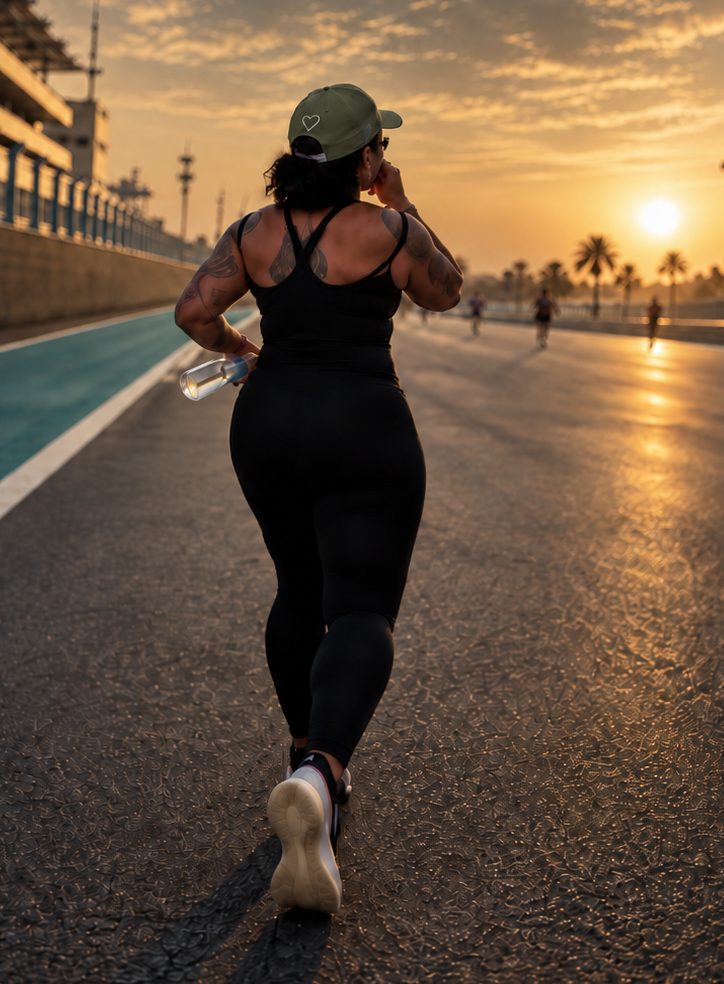
Anyone who knows me knows that movement has become a huge part of my life. I run, I lift weights, I practice yoga and I dance like nobody is watching. And yes, I’m still the slow runner who occasionally wonders why on earth she voluntarily signed up for another long run.
But somewhere along my journey, exercise became about much more than losing weight or getting fitter. It became time for me. Time when nobody needed anything from me. Time to think, breathe, process and sometimes just switch off. Some of my best moments of clarity have happened while running. There’s something about putting one foot in front of the other, being outside and having nothing to concentrate on except moving forward.
Research supports the benefits of regular physical activity for mental wellbeing, including reducing symptoms of anxiety and depression.
But here’s something I want to make very clear. You cannot run away from everything that’s weighing on your mind. You can run 5 kilometers, 10 kilometers or 20 kilometers and still have the same problems waiting for you when you get home.
Movement is an incredibly valuable tool, but it isn’t a magic cure or a replacement for professional mental health care when that’s needed. Sometimes you need a conversation. Sometimes you need to set a boundary. Sometimes you need professional help. And sometimes you need to stop pretending that everything is okay. There’s absolutely no shame in any of that.
What Being a Mental Health First Aider Has Taught Me
As a certified Mental Health First Aider, one of the most important lessons I’ve taken from my training is just how powerful listening can be.
Not listening so you can respond. Not listening so you can offer advice or tell someone how to fix their problems. Just listening. We’re so quick to try to make things better for people. Someone tells us they’re struggling and we immediately want to tell them to stay positive, look on the bright side or remember how much they have to be grateful for.
I know most people mean well. But sometimes those words can leave someone feeling even more alone. Because you can be grateful and unhappy at the same time.
You can have a good career and still be struggling mentally. You can love your family and feel completely overwhelmed. You can have a beautiful life on the outside and be going through something incredibly difficult on the inside.
Two things can be true at once.
And sometimes the most helpful thing we can say is simply, “That sounds really hard. Do you want to talk about it?” No judgement. No unsolicited advice. No trying to convince someone they shouldn’t feel the way they do. Just being there, listening and allowing someone to feel heard.
We underestimate how powerful that can be.
And if someone needs more support than we can offer, helping them find appropriate professional care is another way of showing up for them.
I’m Learning That Peace Is More Important Than Proving a Point
The older I get, the less interested I am in proving how much I can handle. I’ve spent enough years pushing through, putting myself last and telling myself I’ll rest when everything else is done.
Spoiler alert: Everything is never done.
There’s always another email, another responsibility, another person who needs something or another thing that could be better, cleaner, finished or fixed. And if we keep waiting for the perfect moment to look after ourselves, we might be waiting a very long time.
These days, I’m learning that I don’t need to say yes to everything. I don’t need to explain every boundary. I don’t need to feel guilty for taking time for myself. And I certainly don’t need to earn rest by exhausting myself first. Am I brilliant at all of this? Absolutely not.
I’m still a work in progress. I still overthink things. I still take on too much. I still have days when I know exactly what I should be doing for my wellbeing and do the complete opposite. But I’m learning. I’m learning that protecting my peace doesn’t make me selfish. That saying no doesn’t make me a bad person. And that I can care deeply about other people without making myself responsible for fixing everything in their lives. I’m also learning that strength doesn’t always look like pushing through.
Sometimes it looks like stepping away, asking for help or admitting that you’ve had enough. And that counts for something.
Please Check on Your Strong Friends
If there’s one thing I’d love you to take away from this article, it’s this.
Check on the people who always seem to have everything under control.
The friend who makes everyone laugh. The colleague who always delivers. The mum who never seems to stop. The woman who is always checking on everyone else.
Ask her how she’s doing. And when she says she’s fine, don’t automatically assume that she is. Make space for a real conversation. Give her the opportunity to tell you how she’s actually feeling, without rushing to offer solutions.
Of course, not everyone will want to open up, and that’s okay too. Respect that. Sometimes just knowing someone genuinely cares is enough to make a difference.
And if you’re the strong friend? Please let people show up for you too. You don’t always have to be the one holding everyone else’s hand.
You’re allowed to need someone to hold yours.
And when you’ve done that, take a moment to ask yourself the same question.
Because somewhere between looking after everyone else, chasing our goals and managing our responsibilities, we sometimes forget that we need looking after too.
And I think it’s time we changed that.
You don’t have to earn rest. You don’t have to justify needing support. And you certainly don’t have to prove how strong you are by carrying everything alone.
Here’s to the strong women, the tired women, the women figuring things out and the women who have it together one day and absolutely don’t the next.
I see you. And I hope you’re learning, just like I am, that it’s okay to put yourself first sometimes. Because being strong doesn’t mean being invincible. Sometimes the strongest thing we can do is admit that we need someone too. Let’s make checking in on each other something we do all year round, not just on 10 October.
With love,
Natasha aka FitLikeMummy
STRONG. NOT SKINNY.
Helping women 40+ get stronger and live fuller lives.
If you’re experiencing ongoing anxiety, low mood or emotional distress, please consider speaking with a qualified healthcare or mental health professional. You deserve support, and you don’t have to navigate difficult times alone.